
Your Portfolio Starts With a Spark.

A creative growth platform that helps designers stay consistent, build real portfolio work, and get feedback, without the pressure of posting perfect projects.


Role: UX/UI Designer
Tools: Figma, Illustrator
Timeline: 4 weeks

Your Portfolio Starts With a Spark.

A creative growth platform that helps designers stay consistent, build real portfolio work, and get feedback, without the pressure of posting perfect projects.


Role: UX/UI Designer
Tools: Figma, Illustrator
Timeline: 4 weeks

Executive Summary

Designers often struggle with consistency, motivation, and building portfolio-ready work outside of structured environments. SPARK is a creative growth platform designed to solve this by providing monthly challenges, community feedback, and a system that rewards progress over perfection.


SPARK is a creative growth platform designed to help designers stay consistent, build stronger portfolios, and share work without the pressure of perfection. Unlike platforms like Behance or Dribbble that prioritize polished outcomes, SPARK focuses on practice, progress, and community-driven feedback.


As a design student, I struggled with staying consistent and building portfolio work outside of class. I often didn’t know what to create, and existing platforms focused more on showcasing finished work than helping designers grow. SPARK was designed to solve that gap.


Role: Product Designer (UX/UI, Branding, Interaction Design)
Tools: Figma, Illustration, Adobe Illustrator, Procreate, UX Research Methods

Problem

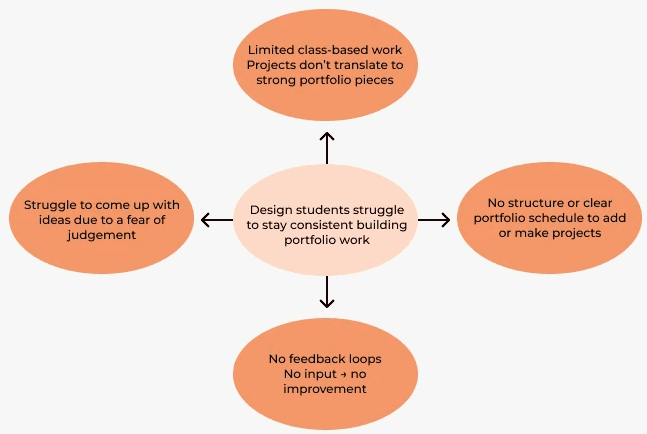
Design students and early-career creatives face a recurring challenge:

  • Portfolio pressure creates anxiety around producing “perfect” work.

  • Designers lack motivation and consistency outside of class assignments

  • Many early designers struggle to maintain consistent project output, often relying on classwork rather than self-initiated projects

  • Finding meaningful project ideas for case studies is difficult

  • Existing platforms emphasize showcasing finished work rather than growth


From personal experience and conversations with peers, I noticed a pattern:

Designers know consistency matters, but lack structure, prompts, and supportive environments to sustain it.

Posting unfinished or experimental work often feels rushed or unprofessional, causing creators to avoid sharing altogether.

Executive Summary

Many early-career designers struggle to build portfolios beyond coursework. While platforms exist to showcase finished work, few support the process of becoming a stronger designer through consistent practice.


SPARK is a creative growth platform that encourages designers to regularly create portfolio-worthy work through monthly challenges, structured feedback, and community motivation. Instead of rewarding perfection, SPARK focuses on progress — helping designers develop skills, confidence, and real-world case studies.


I designed SPARK as a UX/UI product concept exploring how motivation systems, community interaction, and intentional visual design can reduce intimidation and encourage creative consistency.


Role: Product Designer (UX/UI, Branding, Interaction Design)
Tools: Figma, Illustration, Adobe Illustrator, Procreate, UX Research Methods

Problem

Design students and early-career creatives face a recurring challenge:

  • Portfolio pressure creates anxiety around producing “perfect” work.

  • Designers lack motivation and consistency outside of class assignments.

  • Many portfolios contain only coursework, making candidates look similar.

  • Finding meaningful project ideas for case studies is difficult.

  • Existing platforms emphasize showcasing finished work rather than growth.


From personal experience and conversations with peers, I noticed a pattern:

Designers know consistency matters — but lack structure, prompts, and supportive environments to sustain it.

Posting unfinished or experimental work often feels rushed or unprofessional, causing creators to avoid sharing altogether.

Opportunity

What if a platform focused not on performance, but practice?

SPARK reframes portfolio building as an ongoing creative habit supported by:

  • guided challenges

  • structured feedback

  • community encouragement

The goal was to make portfolio development feel achievable, motivating, and human.

Target Audience

Design students

  • Early-career designers

  • College creatives building portfolios

  • Beginners seeking projects beyond coursework

These users balance school, learning, and personal life — meaning solutions must respect time and cognitive load.

Why SPARK is Different

While platforms like Behance and Dribbble allow designers to share work, they primarily function as showcase platforms.

Key Differentiators

1. Practice over performance
SPARK encourages iterative growth rather than polished outcomes.

2. Structured monthly challenges
Users receive guided prompts tailored to portfolio development.

3. Built-in feedback culture
Critique lives directly on projects — not through likes or DMs.

4. Consistency systems
Streaks and completion tracking reward sustained effort.

5. Community without competition
Designed intentionally to avoid social media comparison dynamics.

While platforms like Behance and Dribbble allow designers to share work, they primarily function as showcase platforms.

Key Differentiators

1. Practice over performance
SPARK encourages iterative growth rather than polished outcomes.

2. Structured monthly challenges
Users receive guided prompts tailored to portfolio development.

3. Built-in feedback culture
Critique lives directly on projects — not through likes or DMs.

4. Consistency systems
Streaks and completion tracking reward sustained effort.

5. Community without competition
Designed intentionally to avoid social media comparison dynamics.

Concept Evolution

SPARK originally began as a single-user challenge generator.

However, early exploration revealed a missing emotional component:

Creativity improves when people feel part of something larger. 

The platform evolved into a community-centered experience while maintaining its portfolio-first focus.

Visual Identity

Brand Tone

  • Handmade

  • Energetic

  • Human

  • Encouraging


Design Philosophy

Traditional portfolio platforms feel polished and intimidating.
SPARK intentionally feels imperfect and alive.

Grain textures and sketch illustrations:

  • feel personal

  • reduce pressure

  • signal experimentation

  • make creativity approachable

The Spark Metaphor

A “spark” represents:

  • the beginning of an idea

  • creative momentum

  • discovering creativity within yourself

SPARK is the ignition.

Key Features


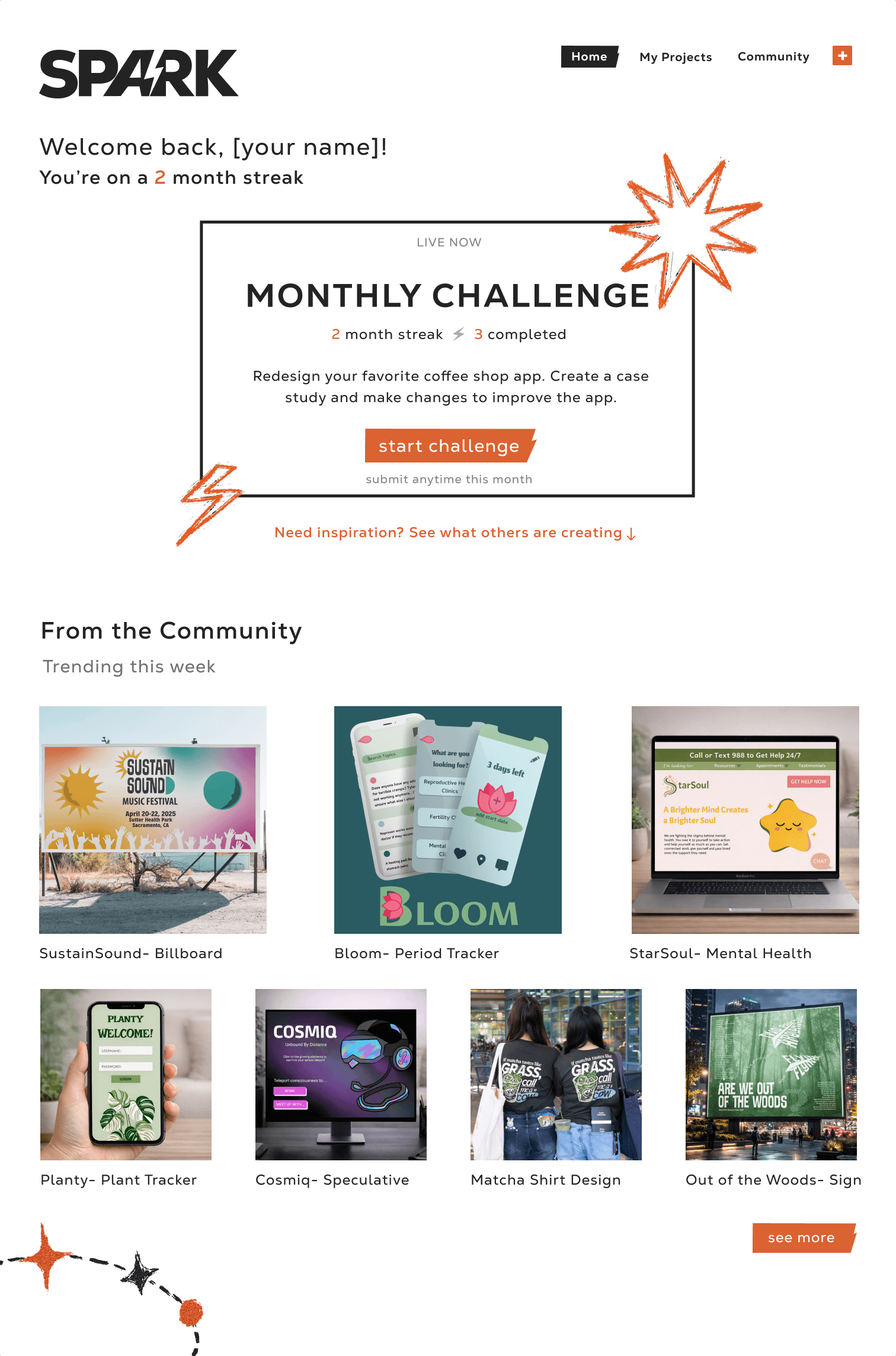
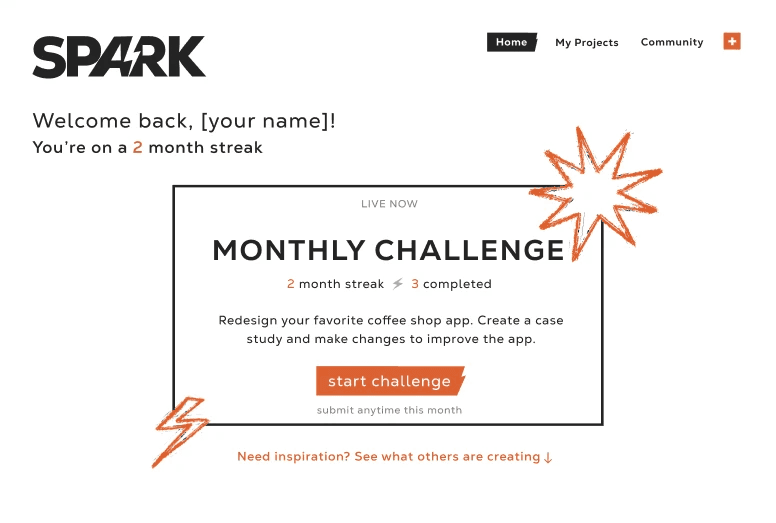
  1. Monthly Challenges — structured creative prompts

  2. Community Feed — inspiration without competition

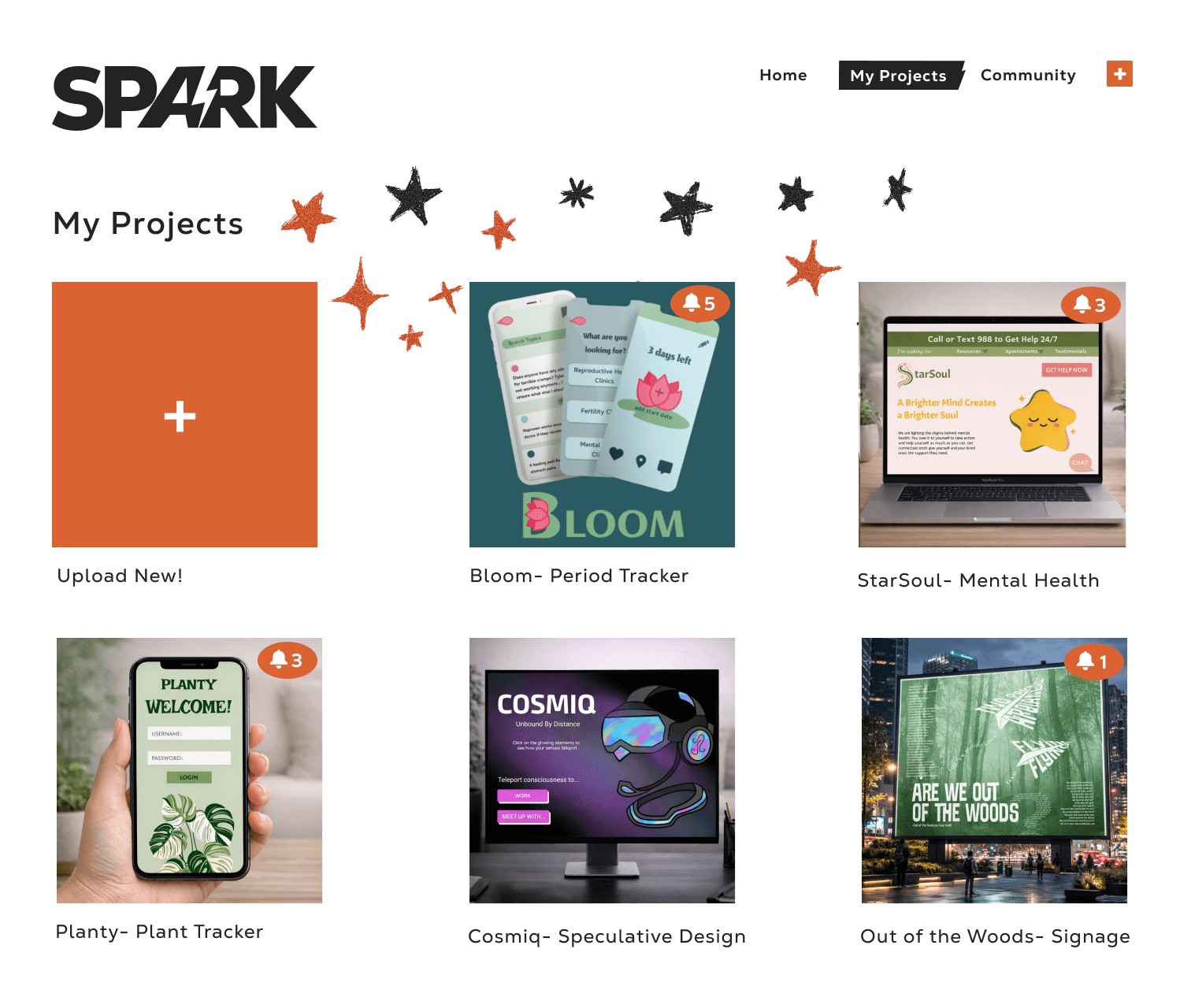
  3. Portfolio Building — projects grow over time

  4. Project Feedback — actionable critique

Challenges During Design

The most difficult problem was balancing:

  • community interaction with professional portfolio credibility

Other challenges:

  • creating a welcoming tone without feeling childish

  • designing intuitive navigation

  • maintaining energy while reducing overwhelm

Iteration included:

  • adding an onboarding transition screen

  • softening the orange accent color while preserving energy

Outcomes & Learning

Through SPARK, I learned:

  • motivation is a UX problem

  • emotional tone influences participation

  • feedback systems shape behavior

  • visual imperfection can increase comfort

  • platforms must guide users, not pressure them

I shifted from designing interfaces to designing creative experiences.

Future Opportunities

With additional time, I would explore:

  • AI-assisted feedback

  • creator tutorials

  • progress analytics

  • mentorship matching

  • long-term portfolio evolution tracking

Role & Skills Demonstrated

This project demonstrates readiness for roles including:

  • UX Designer

  • Product Designer

  • Interaction Designer

  • UI Designer

  • Brand & Experience Designer

Opportunity

Opportunity

What if a platform focused not on performance, but practice?

SPARK reframes portfolio building as an ongoing creative habit supported by:

  • guided challenges

  • structured feedback

  • community encouragement

The goal was to make portfolio development feel achievable, motivating, and human.

What if a platform focused not on performance, but practice?

SPARK reframes portfolio building as an ongoing creative habit supported by:

  • guided challenges

  • structured feedback

  • community encouragement

The goal was to make portfolio development feel achievable, motivating, and human.

Target Audience

Target Audience

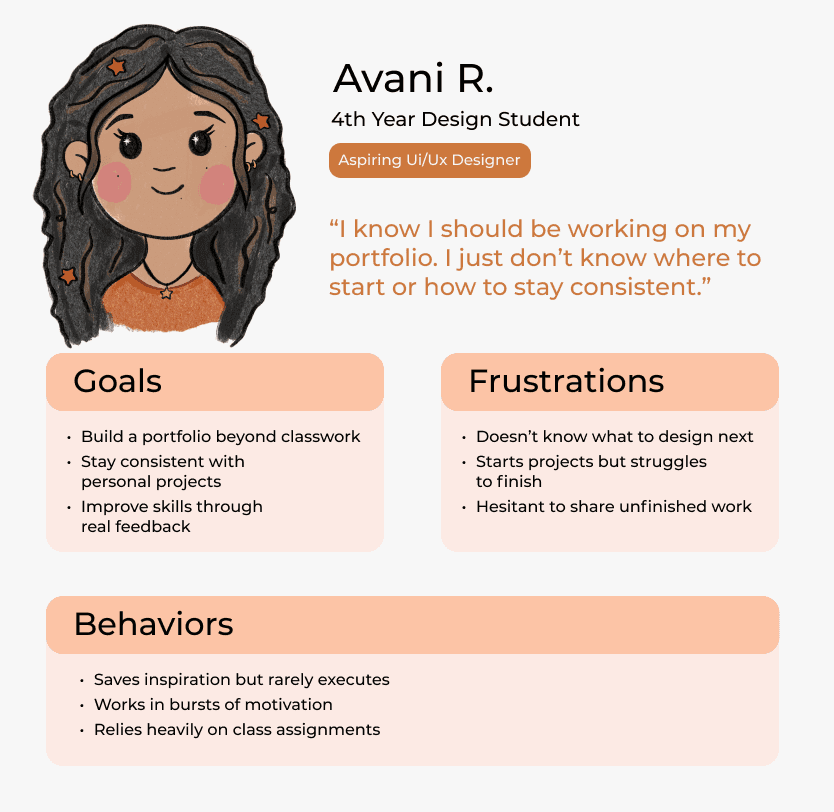
Design students and early-career creatives

  • Building portfolios beyond classwork

  • Seeking structured ways to stay consistent

  • Looking for meaningful feedback to improve

These users often balance school, learning, and personal life, making it difficult to stay consistent without clear direction, accountability, and low-friction ways to start.

Design Goals

Encourage consistent creative practice

  • Reduce intimidation around sharing work

  • Help users build portfolio-ready projects

  • Foster supportive feedback loops

  • Balance community and personal growth

  • Create encouragement rather than competition

Success would look like users:

  • uploading regularly

  • completing challenges

  • exchanging feedback

  • expanding portfolios over time

Research & Insights

This project was informed by:

  • personal portfolio-building struggles

  • peer conversations

  • professor feedback

  • observation of existing creative platforms

Key Insights

  • Designers struggle to maintain consistent personal projects

  • Posting unfinished work feels unprofessional

  • Feedback prepares designers for real-
    world critique

  • Motivation increases when progress is visible

  • Community belonging reduces intimidation

Why SPARK is Different

Why SPARK is Different

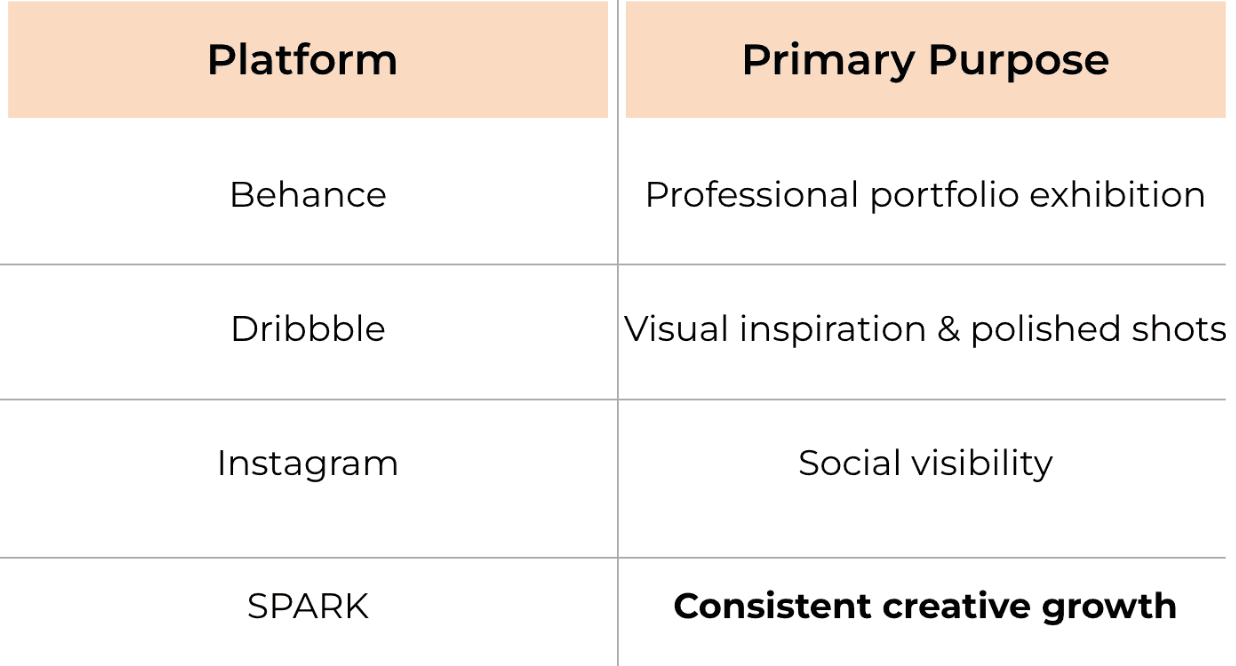
Unlike platforms like Behance or Dribbble that focus on polished outcomes, SPARK emphasizes consistency, iteration, and growth. It creates a space where designers can build habits, receive feedback, and develop stronger portfolios over time.


Key Differentiators:

Practice over performance
Focus on progress, not polished outcomes

Structured challenges
Guided prompts remove idea paralysis

Built-in feedback loops
Critique happens within the workflow

Consistency systems
Streaks encourage sustained engagement

Low-pressure community
Reduces comparison and fear of judgment


SPARK shifts the focus from showcasing finished work to supporting the process of becoming a better designer.
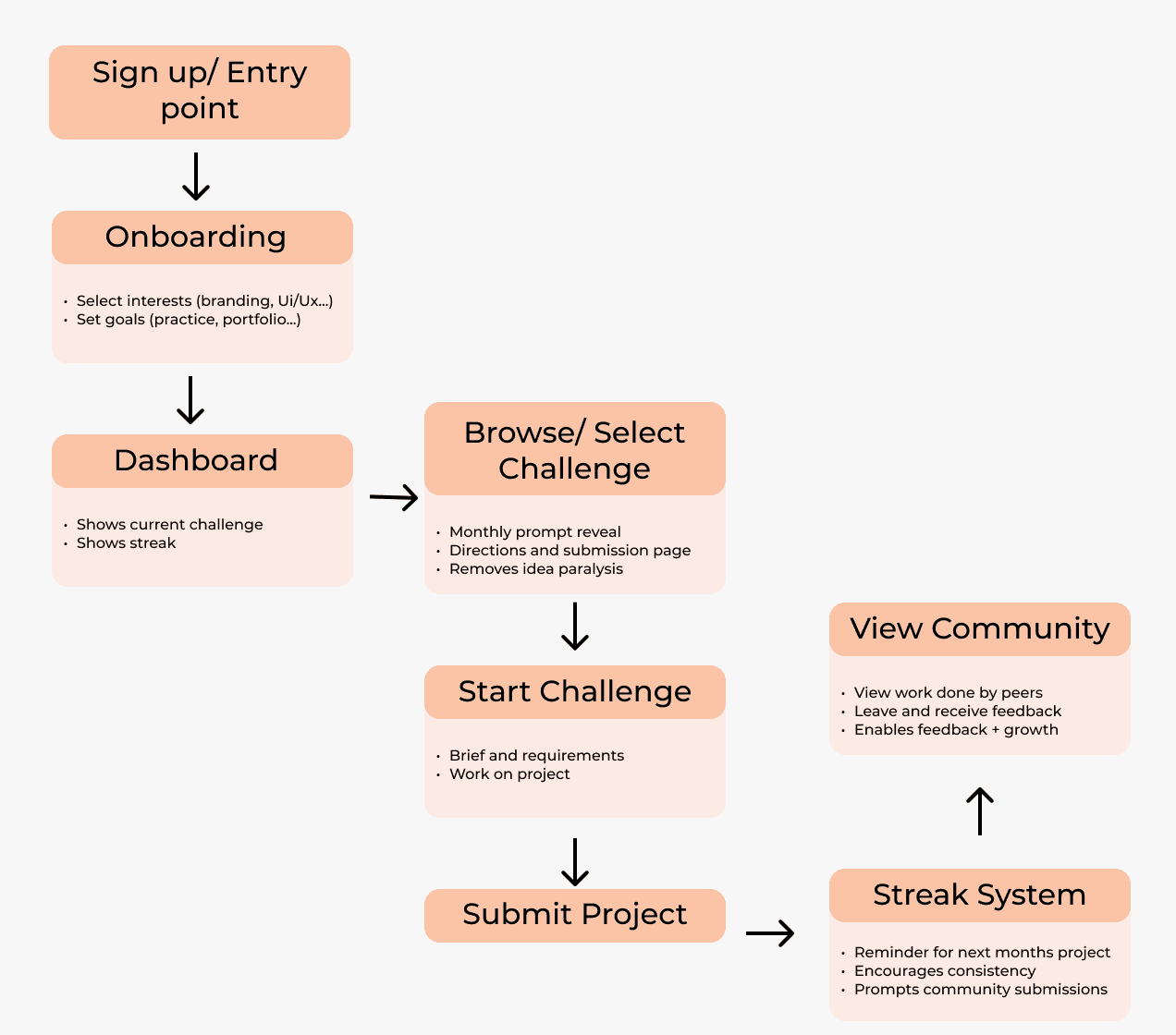
Concept Evolution

Concept Evolution

SPARK originally began as a single-user challenge generator.

However, early exploration revealed a missing emotional component:

Creativity improves when people feel part of something larger. 

The platform evolved into a community-centered experience while maintaining its portfolio-first focus.

SPARK originally began as a single-user challenge generator.

However, early exploration revealed a missing emotional component:

Creativity improves when people feel part of something larger. 

The platform evolved into a community-centered experience while maintaining its portfolio-first focus.

Final Designs & Key Decisions

Final Designs & Key Decisions

Building on the wireframes, I developed high-fidelity designs that focus on clarity, structure, and continuous engagement. Each screen is designed to reduce friction, guide users through challenges, and support consistent creative practice.

View Full Prototype

Building on the wireframes, I developed high-fidelity designs that focus on clarity, structure, and continuous engagement. Each screen is designed to reduce friction, guide users through challenges, and support consistent creative practice.

View Full Prototype

Why Monthly Challenges?

The audience primarily consists of students and beginners.

Weekly challenges:

  • feel rushed

  • reduce quality

  • increase burnout


Monthly challenges:

  • allow deeper exploration

  • fit academic schedules

  • encourage thoughtful case studies

  • reduce screen pressure


SPARK prioritizes sustainable creativity over speed.

Design Decisions

Navigation Evolution

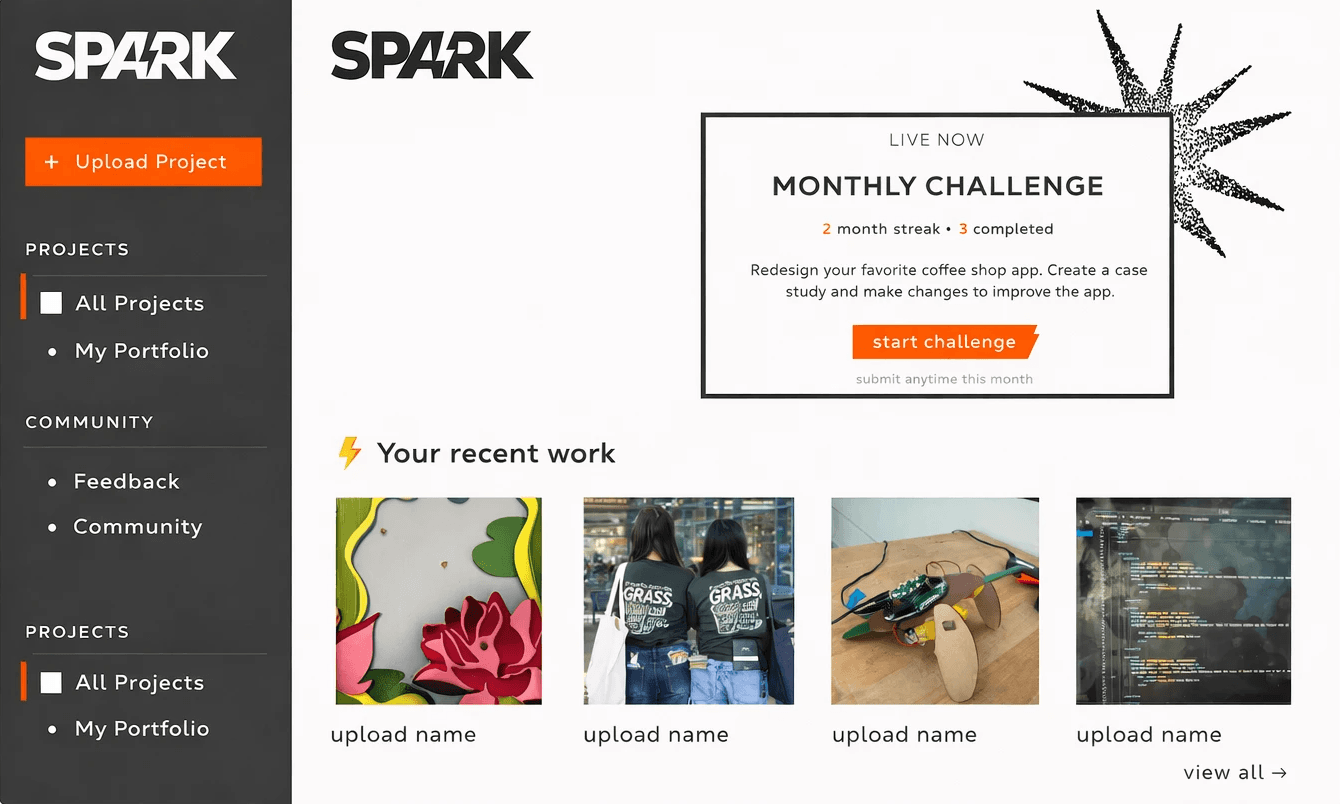
Early versions used a sidebar navigation. Testing and iteration showed:

  • top navigation felt more intuitive

  • increased usable canvas space

  • reduced visual clutter

  • aligned with modern product patterns

Upload Flow Improvement

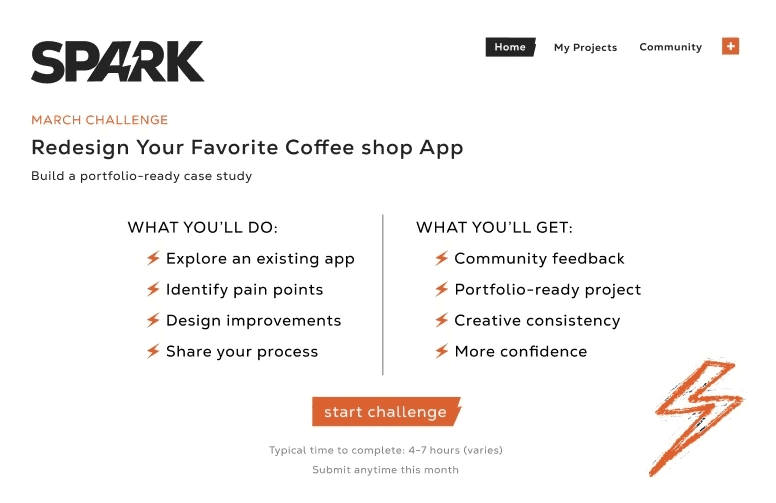
Feedback revealed that moving directly from Start Challenge → Upload felt abrupt.

I introduced an intermediate screen that:

  • provides context and expectations

  • reduces commitment anxiety

This slowed the experience intentionally to support clarity.


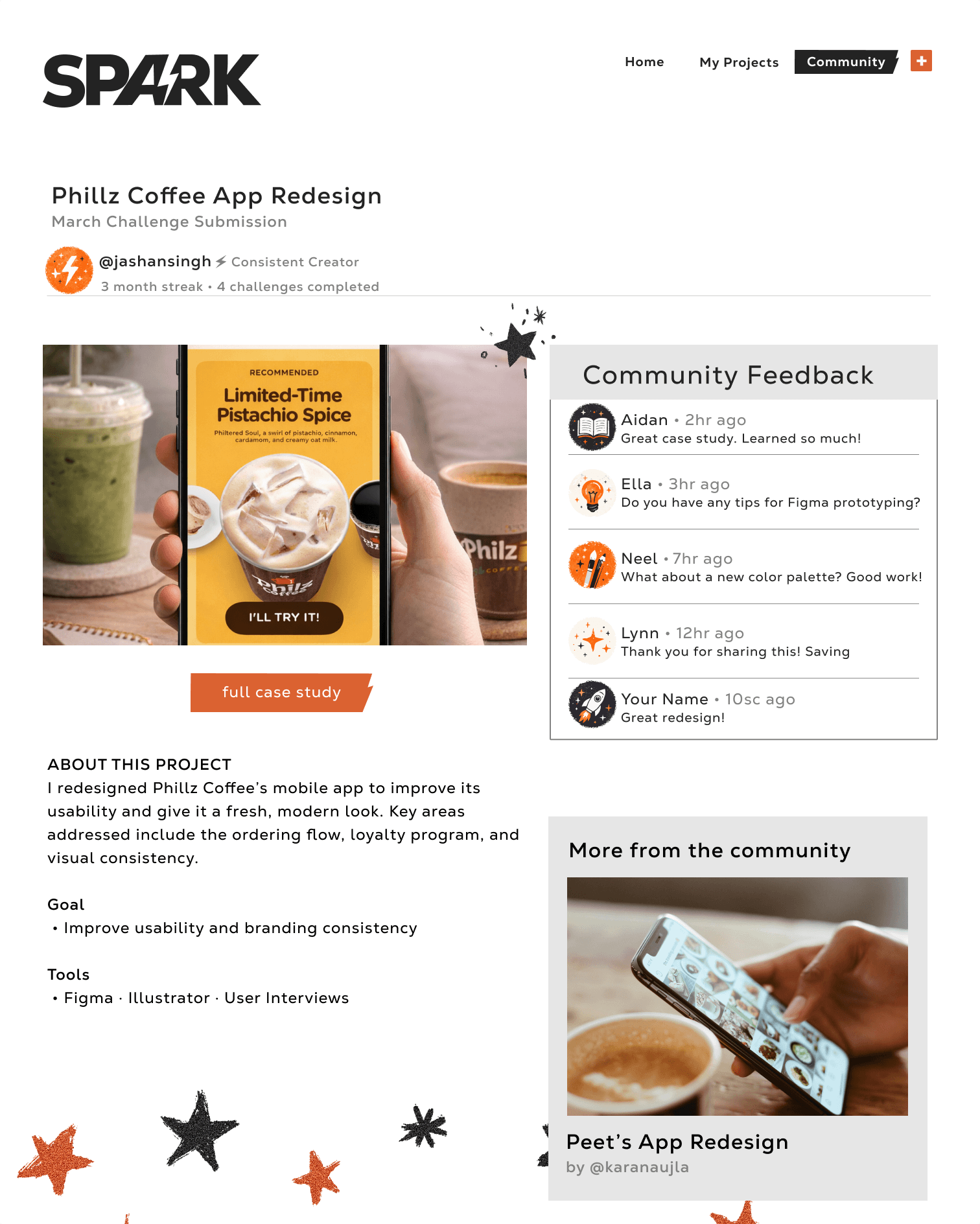
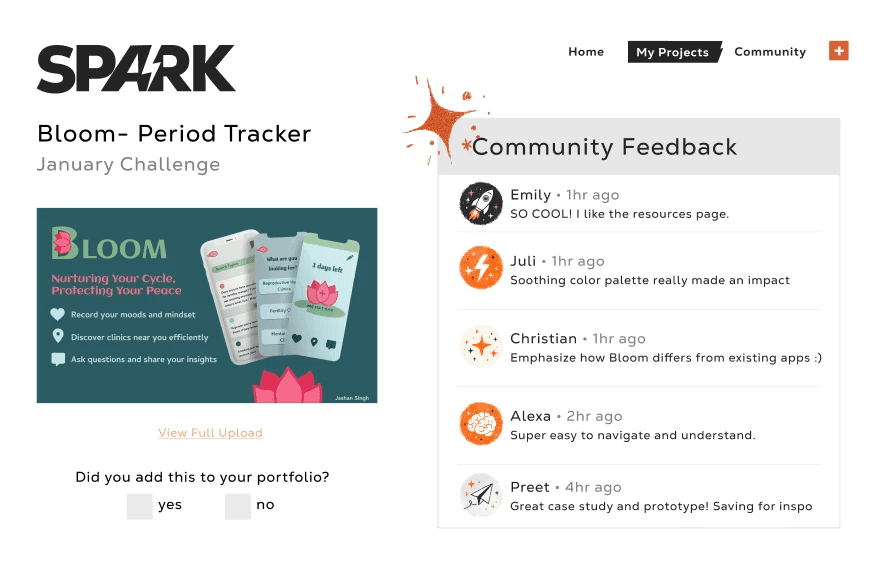
Project-Based Feedback

Feedback exists only on projects — not profiles.

This decision:

  • keeps critique organized

  • prevents overwhelming notifications

  • avoids social-media-style interactions

SPARK emphasizes meaningful critique over engagement metrics.

Motivation Through Streaks

Inspired by behavioral design patterns (e.g., Snapchat streaks), SPARK uses streak tracking to:

  • reinforce habits

  • reward consistency

  • encourage return behavior

Unlike social platforms, streaks directly benefit portfolio growth.

Visual Identity

Visual Identity

Brand Tone

  • Handmade

  • Energetic

  • Human

  • Encouraging


Design Philosophy

Traditional portfolio platforms feel polished and intimidating.
SPARK intentionally feels imperfect and alive.

Grain textures and sketch illustrations:

  • feel personal

  • reduce pressure

  • signal experimentation

  • make creativity approachable

Brand Tone

  • Handmade

  • Energetic

  • Human

  • Encouraging


Design Philosophy

Traditional portfolio platforms feel polished and intimidating.
SPARK intentionally feels imperfect and alive.

Grain textures and sketch illustrations:

  • feel personal

  • reduce pressure

  • signal experimentation

  • make creativity approachable

The Spark Metaphor

The Spark Metaphor

A “spark” represents:

  • the beginning of an idea

  • creative momentum

  • discovering creativity within yourself

SPARK is the ignition.

A “spark” represents:

  • the beginning of an idea

  • creative momentum

  • discovering creativity within yourself

SPARK is the ignition.

Challenges During Design

Challenges During Design

The most difficult problem was balancing:

  • community interaction with professional portfolio credibility


Other challenges:

  • creating a welcoming tone without feeling childish

  • designing intuitive navigation

  • maintaining energy while reducing overwhelm


Iteration included:

  • adding an onboarding transition screen

  • softening the orange accent color while preserving energy

Reflection

Reflection

This project pushed me to think beyond visual design and focus on systems that support long-term user behavior. Rather than designing for a single interaction, I explored how structure, feedback, and motivation work together to create consistency over time.


One key takeaway was the importance of designing for retention, not just entry. Features like streaks and guided challenges were not just functional decisions, but intentional mechanisms to support sustained engagement.


If I were to continue this project, I would explore:

  • Testing different challenge formats and difficulty levels

  • Expanding feedback systems to include mentorship

Impact

Impact

SPARK is designed to shift the focus from showcasing finished work to supporting consistent creative practice. By introducing structured challenges, built-in feedback, and streak-based progression, the platform addresses key barriers that prevent designers from building strong portfolios.

Expected outcomes:

  • Reduces idea paralysis through guided monthly prompts

  • Increases consistency through streak-based engagement

  • Encourages iteration by integrating feedback directly into the workflow

  • Helps designers build stronger, more diverse portfolio work beyond class projects

Role & Skills Demonstrated

Role & Skills Demonstrated

This project demonstrates readiness for roles including:

  • UX Designer

  • Product Designer

  • Interaction Designer

  • UI Designer

  • Brand & Experience Designer