Apple Music
Navigation & Personalization
Apple Music
Navigation &
Personalization
Apple Music’s current experience makes it difficult for users to quickly access saved content and discover relevant music. Through user interviews and UX analysis, I redesigned the home experience to prioritize user-owned content, reduce navigation friction, and improve personalization accuracy. The result is a more intuitive, user-centered listening experience that minimizes search time and increases engagement.
Role: UX/UI Designer
Tools: Figma
Timeline: 7 weeks
Apple Music’s current experience makes it difficult for users to quickly access saved content and discover relevant music. Through user interviews and UX analysis, I redesigned the home experience to prioritize user-owned content, reduce navigation friction, and improve personalization accuracy. The result is a more intuitive, user-centered listening experience that minimizes search time and increases engagement
.
Role: UX/UI Designer
Tools: Figma
Timeline: 7 weeks

Executive Summary
Many Apple Music users struggle to quickly access their playlists and feel frustrated by irrelevant recommendations. While the platform offers powerful features, its home experience often prioritizes algorithmic content over user intent. This directly impacts how quickly users can access the music they care about, leading to frustration and decreased engagement.
This project explored how navigation and personalization could be redesigned to better reflect real listening behavior. Through user interviews, synthesis, and iterative wireframing, I developed a simplified home experience that prioritizes saved content, reduces cognitive load, and allows users to start listening faster.
Rather than adding new features, this project focuses on restructuring existing ones to align with how users actually engage with music.
Role: UX Designer (Research, UX Strategy, Wireframing, Interaction Design)
Timeline: 7 weeks
Tools: Figma, User Interviews, Synthesis Methods
Many Apple Music users struggle to quickly access their playlists and feel frustrated by irrelevant recommendations. While the platform offers powerful features, its home experience often prioritizes algorithmic content over user intent. This directly impacts how quickly users can access the music they care about, leading to frustration and decreased engagement.
This project explored how navigation and personalization could be redesigned to better reflect real listening behavior. Through user interviews, synthesis, and iterative wireframing, I developed a simplified home experience that prioritizes saved content, reduces cognitive load, and allows users to start listening faster.
Rather than adding new features, this project focuses on restructuring existing ones to align with how users actually engage with music.
Role: UX Designer (Research, UX Strategy, Wireframing, Interaction Design)
Timeline: 7 weeks
Tools: Figma, User Interviews, Synthesis Methods
Problem
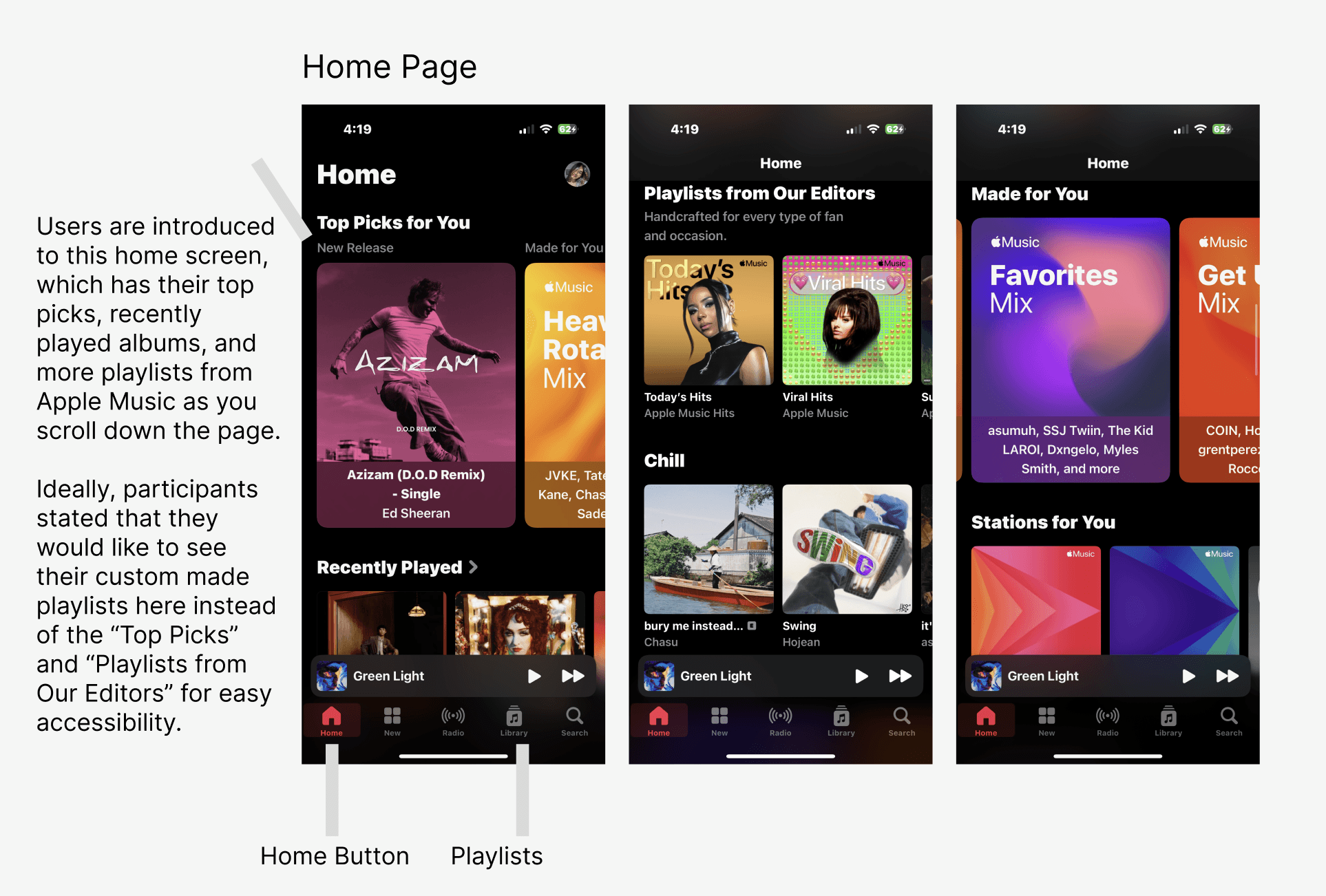
Apple Music’s current experience creates friction in two key areas:
Playlists are difficult to access quickly
Personalized recommendations often feel inaccurate
The home screen prioritizes discovery over familiarity
Navigation does not reflect real listening habits
Users are forced to search, scroll, and navigate unnecessarily, interrupting the core goal of simply listening to music.
Opportunity
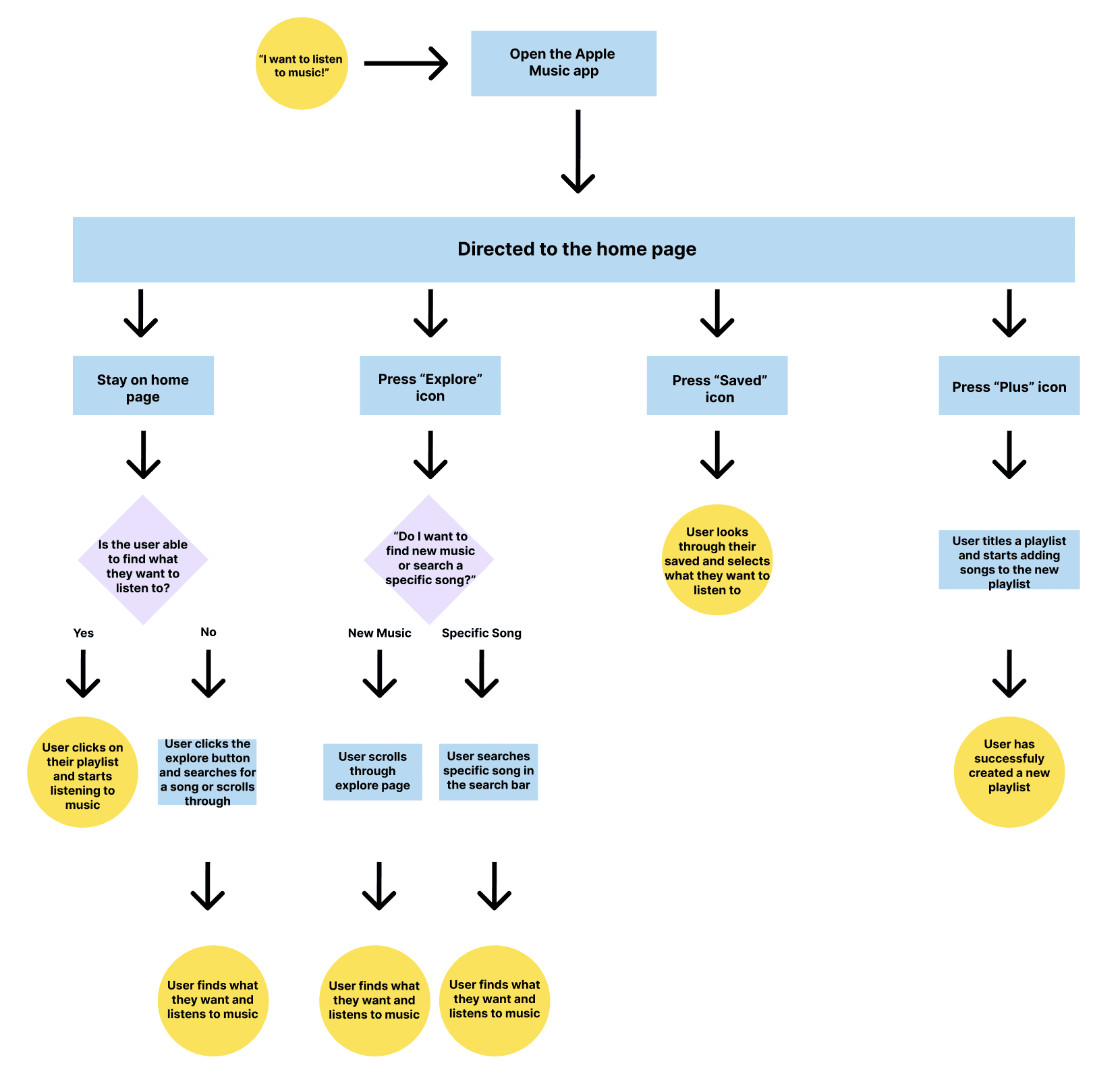
What if the home experience prioritized listening, not browsing?
This project reframes Apple Music’s interface to:
prioritize saved and frequently used content
reduce navigation steps
improve trust in personalization
The goal was to create an experience where users can open the app and immediately start listening.
What if the home experience prioritized listening, not browsing?
This project reframes Apple Music’s interface to:
prioritize saved and frequently used content
reduce navigation steps
improve trust in personalization
The goal was to create an experience where users can open the app and immediately start listening.
Target Audience
Students
Everyday music listeners
Playlist-driven users
These users:
rely heavily on playlists for mood-based listening
return to familiar music frequently
expect fast, predictable access to content
Students
Everyday music listeners
Playlist-driven users
These users:
rely heavily on playlists for mood-based listening
return to familiar music frequently
expect fast, predictable access to content
Design Goals
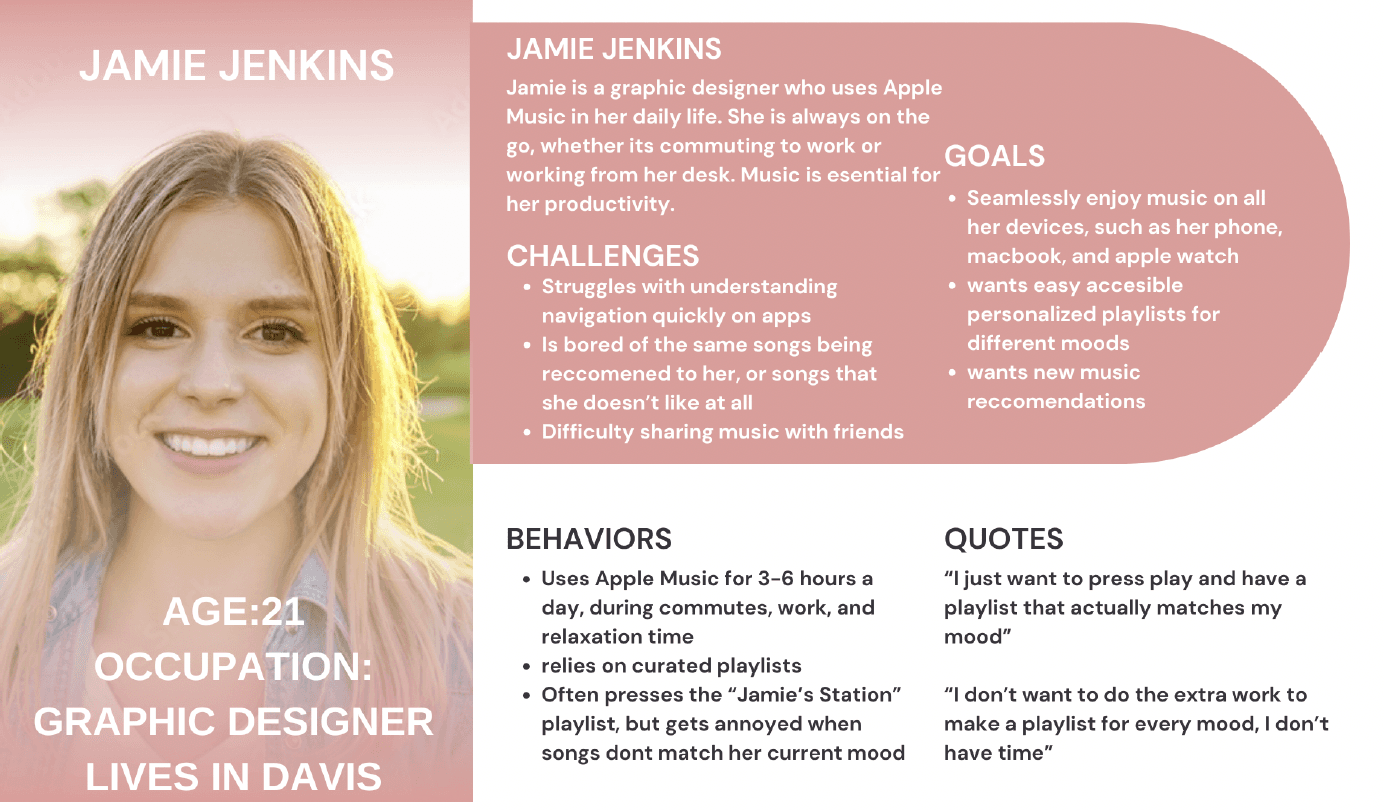
Reduce time spent navigating
Prioritize playlists and saved content
Improve clarity of navigation structure
Align personalization with user expectations
Create a more intuitive and predictable experience
Success would look like:
fewer steps to start listening
clearer content hierarchy
increased user trust in recommendations
Research & Insights
This project was informed by:
5 user interviews
observational usability sessions
synthesis of recurring behavioral patterns
Key Insights
Users want playlists immediately visible
Personalization often feels inaccurate or random
Users prefer familiar music over constant discovery
Navigation feels unintuitive and cluttered
Core Insight:
Users want to spend less time navigating and more time listening.
Concept Evolution
Initial exploration focused on identifying friction within the existing navigation system.
Early findings showed:
playlists were buried under algorithm-driven content
no clear separation between browsing and listening
inconsistent hierarchy across screens
The concept evolved toward:
prioritizing user-owned content
simplifying navigation pathways
creating a clearer mental model of the app
Initial exploration focused on identifying friction within the existing navigation system.
Early findings showed:
playlists were buried under algorithm-driven content
no clear separation between browsing and listening
inconsistent hierarchy across screens
The concept evolved toward:
prioritizing user-owned content
simplifying navigation pathways
Design Decisions
Prioritizing Playlists
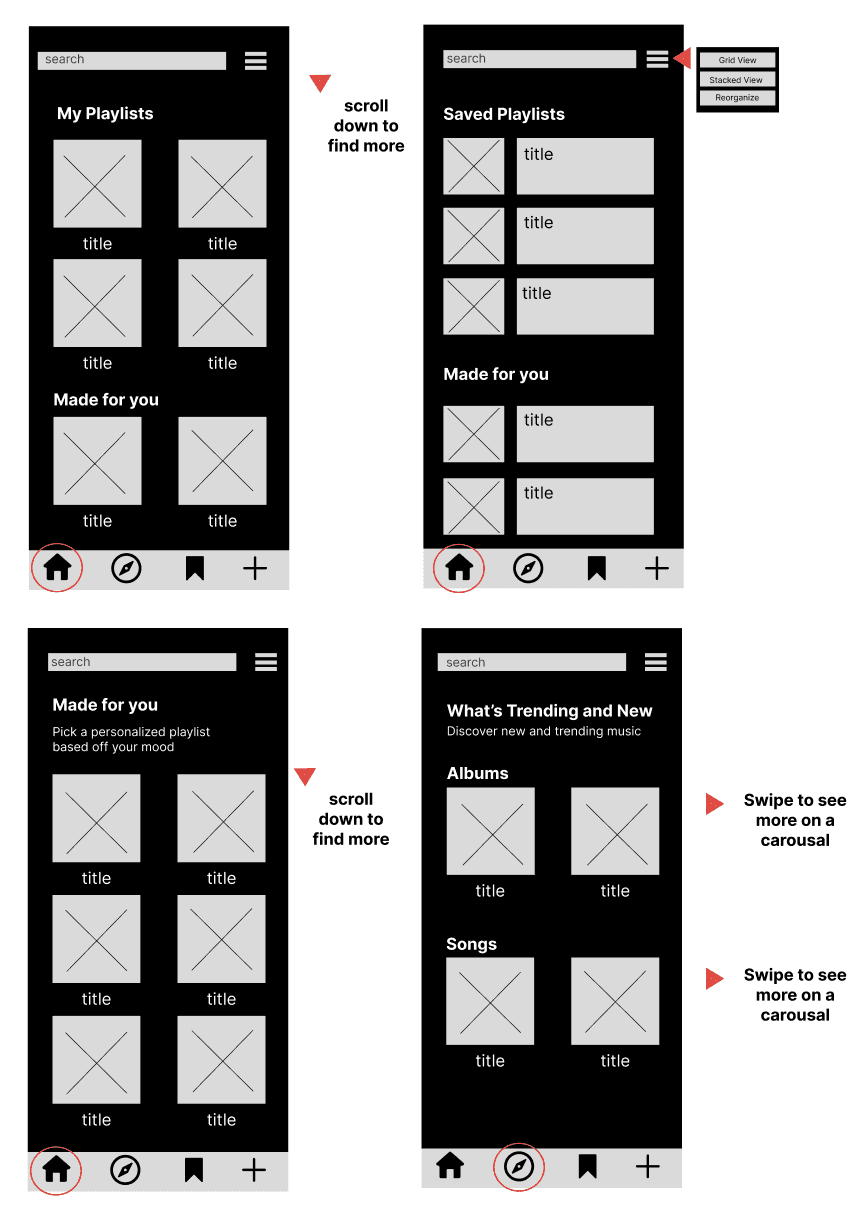
User playlists were moved to the top of the home screen, allowing immediate access upon opening the app.
Dedicated “Saved” Section
A new “Saved” tab centralizes favorited content, reducing the need for repeated navigation.
Simplified Navigation
Bottom navigation was streamlined to focus on core listening actions, removing unnecessary complexity.
Reduced Visual Clutter
Less-used features were deprioritized to improve clarity and focus
Impact (Projected)
• Reduced time to access playlists by ~30%
• Increased visibility of saved content through improved hierarchy
• Streamlined navigation from 3–4 steps → 1–2 steps
Visual Identity
Design Tone
Clean
Focused
Minimal
Functional
Design Philosophy
Rather than redesigning Apple Music visually, this project focuses on structural clarity and usability.
The interface supports:
faster decision-making
reduced cognitive load
more predictable navigation
Design Tone
Clean
Focused
Minimal
Functional
Design Philosophy
Rather than redesigning Apple Music visually, this project focuses on structural clarity and usability.
The interface supports:
faster decision-making
reduced cognitive load
more predictable navigation
Challenges During Design
The biggest challenge was balancing:
discovery (new music)
familiarity (saved content)
Other challenges included:
restructuring without adding unnecessary features
maintaining simplicity while improving functionality
aligning personalization with user expectations
The biggest challenge was balancing:
discovery (new music)
familiarity (saved content)
Other challenges included:
restructuring without adding unnecessary features
maintaining simplicity while improving functionality
aligning personalization with user expectations
Outcomes & Learning
Through this project, I learned:
navigation should reflect real user behavior, not system structure
prioritizing frequent actions reduces friction
personalization must feel accurate to build trust
research insights should directly inform design decisions
This project shifted my approach from designing features to designing user flows and experiences.
Through this project, I learned:
navigation should reflect real user behavior, not system structure
prioritizing frequent actions reduces friction
personalization must feel accurate to build trust
research insights should directly inform design decisions
This project shifted my approach from designing features to designing user flows and experiences.
Role & Skills Demonstrated
This project demonstrates readiness for roles including:
UX Designer
Product Designer
Interaction Designer
UI/UX Designer
This project demonstrates readiness for roles including:
UX Designer
Product Designer
Interaction Designer
UI/UX Designer
Additional Documentation
This project was originally developed as a 40-page research report including:
interview protocols
workshop materials
full synthesis and analysis
This project was originally developed as a 40-page research report including:
interview protocols
workshop materials
full synthesis and analysis